
Low Profile Stainless Steel Standoff Cap Available in Diameters Up to 2 Inches

by Chris Smith

Low Profile Stainless Steel Standoff Caps

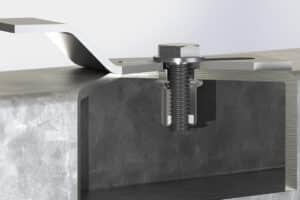
Monarch Metal is pleased to announce a new low profile stainless steel standoff cap product line.  The slim, low profile cap has a radius to show a smooth aesthetic without a standoff cap sticking up when you are installing  a countertop, a transaction counter or a glass surface.

Low Profile Stainless 1'' Diameter Standoff

1” Diameter Stainless Standoff with Low Profile Cap

Low Profile Stainless Standoff

Low Profile Stainless Standoff


The new low profile caps, in addition to the barrels, are made from a corrosion resistant 303 alloy stainless steel.  This stainless steel alloy provides excellent corrosion resistance in hostile environments.  The standard finish for these is a brushed finish, but they are also available in a mirror polished finish.

Low Profile Standoff Cap Sizes

The stainless low profile caps are available in a variety of diameters, including 1”, 1.25”, 1.5” and 2” diameters.

Monarch Metal also provides the complementary hardware including clear vinyl washers, tubing/gaskets, threaded connector rods and hanger bolts for mounting.


2 Inch Diameter Stainless Standoffs – 2” Dia SS Countertop Supports

By Chris Smith.

We do quite a bit of custom work in 2 inch diameter stainless steel standoffs.  What can really make the difference among suppliers to consider is (i) the type of stainless steel round stock they are manufacturing from, (ii) the manufacturing flexibility to accommodate your design needs, (iii) the finish and (iv) the lead time.

2 Inch Stainless Standoff - 2''

2” Dia Stainless Standoff

Input Material for 2 Inch Stainless Standoffs

At Monarch, we use solid 303 Alloy Stainless Rounds as the base material for our standoffs.  This provides powerful corrosion resistance.  From time to time customers will request that we use a 316 marine grade stainless steel if the application will be in a particularly corrosive environment.

Standoff Finishes

The stock finish, and by far the most common finish we offer for stainless standoffs, is a brushed finish.  A brushed finish is a beautiful grained finish in the material with a little shine to it.  Another popular finish is a mirror polished finish.  Because the base material is stainless steel, you don’t have to worry about coating or painting the material.

To find out more about our 2 inch stainless steel standoffs, contact us at 631-563-8967 or submit a quote request online here: http://www.monarchmetal.com/how-to-buy/get-a-quote/


Stainless Steel Standoff Finishes

By Chris Smith

Stainless steel makes a great base material for standoffs because of its strength, corrosion resistance, ease of maintenance and natural aesthetic appearance.  The aesthetic appearance that customers see is not the way the materials shows up at the shop though!

Generally, when working with stainless steel, manufacturers will offer mechanically applied finishes, rather than coatings, because the coating would likely be less durable than the material itself, and you are already paying a premium for the material.  The two most popular mechanical finishes are a brushed finish and a mirror polished finish.  A brushed finish is quite simple and is accomplished by applying an abrasive to the outer diameter and then blending the finish with a lighter abrasive such as a skotch brite.  Sometimes if the stainless round is pitted, the manufacturer will take a .010” skin cut to the diameter to remove any surface imperfection and have a better starting point to save time finishing.  Brushed finishes are generally accomplished on a lathe but another alternative would be to center-less grind the material.

To enhance the finish to a mirror polish, you effectively need to make the surface even smoother through the use of increasingly higher abrasives and then polishes.  A mirror polish requires quite a bit more time than a brushed finish because rather than having the finish applied at 1 or 2 passes, a mirror polish can oftentimes require 7-8 handlings.

The picture below shows stainless steel standoffs with brushed and mirror polished finishes.


Stainless Steel Standoffs

Stainless Steel Standoffs in Brushed and Mirror Polished Finish

One thing to be careful of when specifying stainless standoffs is matching hand finishes with mechanical finishes.  Stainless steel trim in architectural applications is often made from mechanically polished stainless steel sheet, which is entirely different equipment than what is used in finishing stainless steel standoffs.  The specifier should be conscious that these finishes will not identically match.

Architectural Bronze – Statuary Bronze Kick Plates

Posted on: No Comments

By Chris Smith

Monarch recently fabricated some bronze / brass kick plates with a custom architectural bronze / statuary bronze finish. We always really enjoy jobs like these because they are such a pretty trade finish, and the craft for applying this finish correctly is just dying. You can see the deep coloring the oxidized bronze takes on and in the close up you can see the natural color variation in the material.

IMG_0426-300x225

IMG_0432-300x225

IMG_0425-300x225

Monarch custom fabricates these to order, so they are available in a variety of sizes in large and small quantities.

Using Aluminum Monarch Z Clips with ACQ Treated Wood

Posted on: No Comments

By Chris Smith

When you use Monarch Z Clips with ACQ treated wood, you need to be careful.

ACQ is an acronym for Alkaline Copper Quaternary, and ACQ treated wood is wood treated with a preservative that protects against rot, fungal decay and termite attack. ACQ treated wood products are commonly used for projects such as decks and fencing. ACQ products have a dark, greenish color to begin with and will age to trun light tan/brown color with exposure to sunlight, eventually fading to a grayish color. The copper and quaternary compounds are applied to the wood by pressure and are effective fungicides and termiticides.

Panel Clip – Monarch

Panel Clip – Monarch

The trick comes in using this type of wood with aluminum. The copper in the ACQ treated wood interacts with the dis-similar aluminum through a galvanic interaction. The standard Monarch Z Clips are made from aluminum. Galvanic corrosion occurs when dissimilar metals come into contact with one another in the presence of moisture. An electrochemical reaction occurs between the copper and the aluminum and one material loses electrons and corrodes as the anode, while the other one gains electrons as the cathode.

Alternatives for using Monarch Z Clips with ACQ treated wood include using our Stainless Steel Monarch Z Clips (available in 304 alloy standard and 316 Marine Grade Stainless Steel by special order) or to use a hot dip galvanized steel. Another alternative would be to use a polyethylene barrier with a minimum thickness of 10 mils. Whichever clip you select, you should also take care in selecting the appropriate screw to use with the clip.

Selecting the Right Monarch Z Clip for Your Application Every Time

Posted on: No Comments

By Chris Smith

Monarch Metal Fabrication introduced a Monarch Z Clip Selector Tool today to assist customers in understanding the right Monarch Clip for their application. Below is a screen shot of the new page.

Z-Clip-Selector-Tool-Screenshot

The tool asks the user to input the environment of the project (indoor / outdoor), the clearance between the top of the panel and the finished ceiling, the material and thickness of the panel and the substrate of the mounting surface. The tool then returns a recommendation of which Monarch Z Clip to use, which screw to use with the panel clips on the rear side of the panel and what screw to use for the continuous lengths along the wall. In addition, based on testing that Monarch has recently performed, the selector tool gives information on the weight at which the system failed in practices.

Monarch Z Clip Load Bearing / Metal French Cleat Load Rating

Posted on: No Comments

By Chris Smith

Introduction

One of the most frequent requests at Monarch Metal is for the load bearing information of our Monarch Z Clip Systems for installing panels, signs and art work. In all of the internal tests Monarch has done, it has been the screws holding the Monarch Clips that fail and not the Monarch Clip itself. However, the question has come up frequently enough that we engaged Qualtim, Inc., a third party independent laboratory, to perform testing on the clips.

Testing Design

As part of the test design, we set out with the goal to understand what the mode of failure and relative strength would be for the most common installations. To understand the mode of failure, one has to start with the elements that are important to determining the strength of the system. The 5 elements to consider are:

1) The mounting surface for the continuous lengths. For example, will they be mounted to wood studs or metal studs? Will there be blocking? Drywall?

2) What screw is being used to mount the continuous length? Is it a sheet metal screw, a wood screw or a specialty screw? How long is the screw? What is the diameter?

3) Which Monarch Clip is being used? Stainless Steel or Aluminum?

4) What is the material, thickness and size of the item being hung?

5) What screw is being used to mount the shorter panel clips to the back of the panel?

Figure 1. Monarch Z Clip Cut Through Drawing

Figure-1-300x139

We only give all of these questions to illustrate the number of variables to control for when testing and show the difficulty of designing an appropriate test. These variables do not even include the typical variables to consider such as the environment of the installation as well as the direction of the force (assumed to be entirely in shear in this testing.)

To try to address the widest cross section of applications, we designed three different tests.

1) The first test was designed to test the load at which the Monarch Z Clips pull out from the backside of the panel.

2) The second test was designed to test the load at which the system would fail in a standard installation of a ¾” thick MDF veneered panel onto steel studs with ¾” OSB blocking.

3) The third test was designed to test the load at which the system would fail in a standard installation of a ¾” thick MDF veneered panel onto wood studs with ½” gypsum sheathing.

Standard Installation

A standard installation of a ¾” Thick, 48″ Wide x 96″ Tall MDF panel, involves mounting three different continuous lengths along the wall parallel to the floor. The continuous lengths would be spaced approximately 30″ apart. The continuous lengths are fastened to studs at a minimum of every 16″ on center with the appropriate screw. Our testing was done with 22 Gauge Metal Studs and Wood Studs and the results would not apply for weaker substrates. Installers often use ¾” blocking in front of the wall to allow for added fasteners every 8″ on center along the wall. Along the panel, installers would typically use 12 panel clips on the back of the panel; 4 panel clips at each height to interlock with each of the 3 continuous lengths. These clips would be spaced 12 to 15 inches apart and fastened to the back of the panel with (2) #8x ¾” Pan Head Deep Thread Screws for a total of 24 screws in a typical panel installation.

Test Set-up 1 – Shear Test of Panel Clips

The first test formation was designed to test the shear strength of the panel clips mounted to the rear side of the panel. The continuous lengths were prevented from failing by reinforcing the wood studs with SPF 2 x 4 blocking and fastening the continuous length to the blocking every 4 inches.

Figure 2. Monarch Test Set-up 1 – Strength of Clip Attached to Panel

Figure-2-Test-I-Summary


Figure 3: Test Setup 1 – Wall Mount12-0107-014-300x225 Figure 4: Test Setup 1 – Panel as Mounted12-0107-017-300x225

The table below describes the specifics of the test conditions as well as the results of the testing.

Figure 5: Test Setup 1 – Testing Summary

Figure-5-Test-1-Results

Test Set-up 1 – Conclusion

In these conditions where we controlled the set up to test only the Monarch Clips attached to the rear side of the panels, the panel failed at an average of 8,318 pounds. There were (24) #8 x 3/4″ pan phillips deep thread screws securing the (12) Monarch MF375 Clips to the back of the panel. The load per screw where shear failure ocurred was 347 pounds. It is important to note that the Monarch Z Clip’s themselves did not fail at this load.

Test Set-up 2 – Standard Installation on Metal Studs with Blocking

The second test set-up was designed to test the shear strength of the Monarch Z Clip System for wall cladding where the base mounting substrate is metal studs with blocking. Qualtim used 3/4″ OSB for blocking for tests and drilled through the blocking at 16″ on center to secure the continuous lengths to the metal studs.

Figure 6. Monarch Test Set-up 2 – Monarch Z Clip System in Metal Studs with Blocking

Figure-6-Test-Set-Up-2


Figure 7: Test Set-up 2 – Wall Mount12-0107-097-225x300 Figure 8: Test Set-up 2 – Panel Rear Side12-0107-110-225x300


The table below describes the specifics of the test conditions as well as the results of the testing.

Figure 9: Test Setup 2 – Testing Summary

Figure-9-Test-2-Results

Test Set-up 2 – Conclusion

In these conditions where we tried to recreate a typical installation of a 3/4″ MDF panel using the Monarch Z Clip system on metal studs with plywood blocking, we found that the average panel failed at 4,254 pounds. The mode of failure was that the continuous length (as well as the panel) bowed and bent at high pressure, which had the effect of prying the screws holding the Monarch Z Clips to the back of the panel, forcing them to pull out. (24) #8 x 3/4″ pan phillips deep thread screws were used to secure the (12) Monarch MF375 Clips to the back of the panel. The load per screw where shear failure ocurred was 177 pounds. It is important to note that the Monarch Z Clip’s themselves did not fail at this load.

Test Set-up 3 – Standard Installation on Wood Studs with Gypsum

The third test set-up was designed to test the shear strength of the Monarch Z Clip System for wall cladding where the base mounting substrate is SPF wood studs with 1/2″ gypsum sheathing.

Figure 10. Monarch Test Set-up 3 – Monarch Z Clip System in Metal Studs with Blocking

Figure-10-Test-Set-Up-3


Figure 11: Test Set-up 3 – Wall Mount12-0107-029-300x225 Figure 12: Test Set-up 3 – Panel Rear Side (Failed)12-0107-062-225x300

The table below describes the specifics of the test conditions as well as the results of the testing.

Figure 13: Test Setup 3 – Testing Summary

Figure-13-Test-3-Results

Test Set-up 3 – Conclusion

In these conditions where we tried to recreate a typical installation of a 3/4″ MDF panel using the Monarch Z Clip system on SPF wood studs with gypsum sheathing, we found that the average panel failed at 4,009 pounds. The mode of failure was that the continuous length (as well as the panel) bowed and bent at high pressure, which had the effect of prying the screws holding the Monarch Z Clips to the back of the panel, forcing them to pull out. There were (24) #8 x 3/4″ pan phillips deep thread black oxide screws securing the (12) Monarch MF375 Clips to the back of the panel. The load per screw where shear failure ocurred was 167 pounds. It is important to note that the Monarch Z Clip’s themselves did not fail at this load.

Summary

Monarch conducted testing to determine the ultimate shear strenght of a standard installation using the Monarch Z Clip system and determined that the system failed at between 3,700 to 4,401 pounds in the setup tested. In a panel installation, the Monarch Z Clip is only one element of five in the hanging system: (i) the material and thickness of the surface the panel is being mounted to, (ii) the screw used to fasten the Monarch Continuous length to the mounting surface, (iii) the Monarch Z Clip System used, (iv) the screw used to fasten the Monarch Clips to the back of the panel, and (v) the material and thickness of the panel. The testing indicated that in a standard installation, the weak point of the system was the screw holding the Monarch Clip to the back of the panel. The mode of failure was pull out of the screws securing the Monarch Clips to the back of the panel, as the continuous lengths bent across the length and wedged under the shorter panel clips.

Hanging Aluminum Panels

Posted on: No Comments

By Chris Smith

Aluminum substrate panels are becoming more and more common as the base substrate for silk screening photos or as cladding. Hanging aluminum panels using Monarch “Z Clips” is different from a typical wood panel installation in that installers are limited in the mechanical fasteners they can use on the rear side of the panel.

Attaching Monarch Z Clips to an aluminum panel can be a challenge without mechanical fasteners.

Attaching Monarch Z Clips to an aluminum panel can be a challenge without mechanical fasteners.

There are several options for mounting the clips to the back of the panel.

If the panels are very light, then you could potentially use a Very High Bond (VHB) double sided tape. For this to work, you would clean the surface of the panel and the clip using an abasive to create a clean rough bonding surface and then apply the tape. VHB tape is relatively easy to use, but be careful, because it bonds quickly and then can not be moved.

Monarch Z Clips Attached

Monarch Z Clips Attached

Another option is to use an epoxy. Here at Monarch, we generally direct people to 3M’s industrial adhesives & tapes help desk for help with selecting the right adhesive. Their number is 1-800-362-3550. Dial prompts 2-2-2 and the information that you will need to provide would be the clip material (aluminum), the material of the panels and the environmental conditions. You are going to be conscious of the open time, the handling time and the cure time. You are also going to make sure the environment is right for the epoxy to cure and you are going to need a clamping system for working during the application.

If you have a perimeter area of the panel that will not be visible, then another option would be to attach a mdf or plywood blocking to the panel and then just use a regular #8 pan head screw to attach the z clips to the blocking.

Selecting Screws to Use with Monarch Z Clips | Panel Clips

Posted on: No Comments

By Chris Smith

There are a number of factors to take into account when selecting the correct screw to use with your Monarch Z Clip | Panel Clip. Generally, the two most important questions are 1) what will fit with your Monarch Z Clips and 2) what will work with the substrate I am fastening to.

This drawing provides a view through the wall of a Monarch Z Clip engaged with a continuous length.

This drawing provides a view through the wall of a Monarch Z Clip engaged with a continuous length.

The Monarch Z-Clip System

For those of you that are not familiar with Monarch Z Clips, they are a blind fastening system used to hang wall panels, signs, artwork and more. The shorter panel clips mount to the rear side of the item being hung and engage with the Monarch Continuous Lengths which are mounted to the wall. The illustration to the left shows a cut through of a wall looking at the system.

Before we can discuss the right screw to use, first we have to be clear about where we are talking about: mounting the shorter panel clips to the panel or mounting the continuous length to the wall.

Choosing a Screw with a Z-Clip | Panel Clip

The screws that connect the shorter panel clips to the panel have to take into account the substrate and thickness of the panel and the height of the head of the screw. The most important variable is the height of the head of the screw, because if the screw head is too large, the Z Clips can not engage. See the drawing below which illustrates that for our standard Monarch Z Clips, the head of the screw can be no greater than .125”. The most common screw head used with our Monarch Z Clips is a #8 pan head screw. For example, if you were hanging a 3/4” MDF panel, you could select either a #8 x 3/4” or #8 x 5/8” pan head philips black oxide deep thread screw. The deep threads help to get a better grip in the MDF material for better pull out resistance. Monarch stocks these in 1/2”, 5/8” and 3/4” lengths.

The height of the head of the screw must be less than .125” to work with our standard Monarch Z Clips. A standard #8 Pan Head screw is used most frequently.

The height of the head of the screw must be less than .125” to work with our standard Monarch Z Clips. A standard #8 Pan Head screw is used most frequently.

For the wall side of the installation, the constraint with the height of the head is the same. The head of the screw used must be less than .125”. Any #8 pan head, modi-truss head, or other low profile head should work. Your first instinct might be to use a flat head wood screw, however, to use a flat head wood screw you would need to countersink each of the holes on the z clips, which can be time consuming. You are also going to want to take into account the substrate and thickness of your mounting surface. Questions you should ask yourself are: Are they wood or metal studs? Will there be wall board over the studs? Is there going to be blocking installed?

Stainless Steel and Aluminum Kick Plates – How to Choose the Right Kick Plate for Your Application?

Posted on: No Comments

By Chris Smith

Stainless steel kick plates (also in aluminum and other metals) are used very commonly in commercial and institutional construction to prevent damage to doors because of their durability and ease of care. A brushed or polished finish can retain its appearance over the life of the building with proper care.

Some considerations you have to think about when choosing a kick plate are: What are the appropriate dimensions for the kick plate? How will the kick plate be mounted to the door? How thick should my kick plate be? and What finish will look best in my application?

Kick-Plate-300x76

1) What are the appropriate dimensions for the kick plate?

Kick plates should always be ordered 2” shorter than the door width to avoid interfering with the door jam when you are closing the door. Beyond this, the height and exact size of the kick plate is a matter of preference or what was specified for your specific application. Obviously, the more of the door that you cover, the more you protect the underlying door itself from damage. Generally, we see four different common applications for kick plates. The first, a mop plate, is about 8” high and is at the very bottom of the door to protect the door against damage from janitorial mops. The second, a traditional kick plate, is 6 to 12” high to prevent damage from mops and from boots and shoes when people hold and kick doors open. The third is a armor plate that can be up to 48” high and basically covers the entire bottom half of the door. The fourth and final variation is a stretcher plate, which is for hospital applications and is designed to protect the door against stretchers bumping into them. These are 6 to 12” high and are located at the approximate height of the handle parallel with the floor.

Kick-Plate-Varieties-300x192

There are several varieties of kick plates.

2) How will the kick plate be mounted to the door?

The standard options we offer here at Monarch are adhesive mounted and screw mounted, although some customers have asked us to custom make a magnetically mounted kick plate. For an adhesive mounted plate, we will pass the plate through a low grit wide belt sander to create a rough surface on the back which is ideal for using an adhesive to mount the kick plate to the door. Some customers will choose to use double sided VHB tape as well, to help with lining up to ensure a straight fit. We typically point people to the 3M industrial adhesives help line for questions on specific adhesives. They have 8 – 10 engineers that man the phone help desk are a fantastic resource for selecting the appropriate adhesive.

For a screw mounted kick plates, our standard kick plates have 3/16” diameter holes, 8” on center for mounting the plates. Customers will generally then use a low profile #6 x 5/8” sheet metal screw for mounting. Other custom options are counter sinking the holes for a flush mount, using TEK screws to avoid having to pre drill the holes in the door, security TORX (aka tamper resistant TORX) screws to require specialized tooling for removal.

3) How thick should my kick plate be?

The industry standard plate is 0.05” thick, which is 18 Gauge Stainless Steel or 050 Aluminum. For heavy duty applications (such as the stretcher application described above) we often see customers select the 0.06” thick heavy duty variety which is made from 16 Gauge Stainless Steel or 063 Aluminum. We do make thicker kick plates as well, such as in .125” Thick 11 Gauge Stainless Steel.

4) What finish will look best in my application?

In stainless steel, 90% of the kick plates we make have our factory #4 finish on them which is a very nice brushed stainless steel appearance that is quite durable. Other finish options for stainless steel are dull (unfinished), mechanically brushed finish (applied with a wide belt sander) or a mirror polished finish.

In aluminum, we typically see customer either select a dull finish or a mechanical brushed finish. Generally what steers this selection is the specification or the surrounding hardware appearance.

Other options to consider are whether you want square corners or if you would prefer a radius on the corners and this is again a consideration often selected based on the surrounding room and hardware.

If you would like to discuss your application specifically, don’t hesitate to give us a call at 631-563-8967.